Grandeur Events: Pune Celebrations
Experience enchantment at Fort JadhavGADH, Pune. From dream weddings to historic retreats.
By Web Admin at KHIL, Fort JadhavGadh
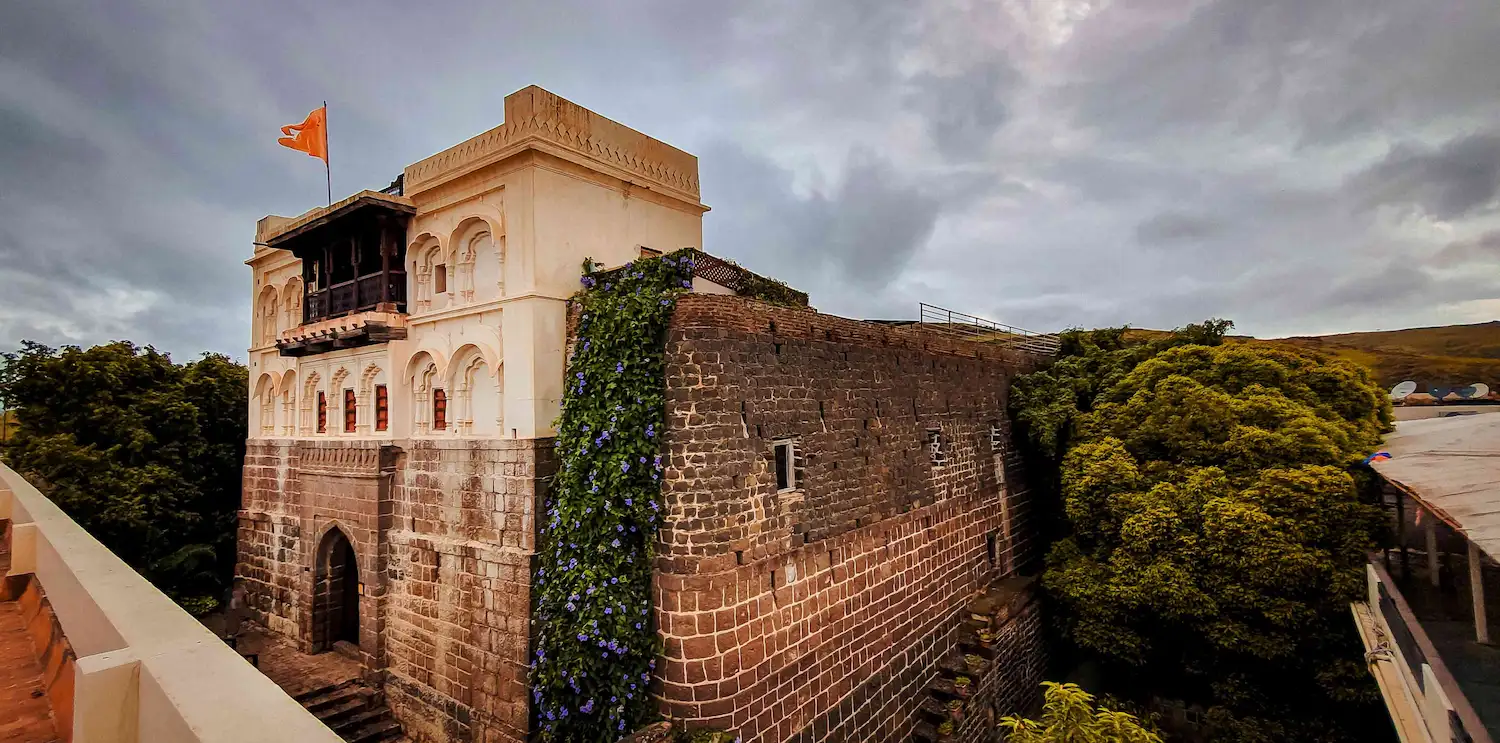
The Aai Museum is a heritage collection inside Fort JadhavGADH, the 300-year-old Maratha fort near Pune. It holds artefacts spanning centuries, including brass and copper kitchenware, a bullock cart, an ornate palkhi, old doors, war ammunition and Tanjore paintings, displayed within the living fort rather than a separate gallery, so the collection and its setting tell one story.
Most hotel museums are an afterthought, a glass case in a lobby. The Aai Museum at Fort JadhavGADH is different, because it sits inside a real 300-year-old fort, so the artefacts and the walls around them belong to the same world. For guests, it is one of the things that makes a stay here more than a resort break, and for anyone interested in Maratha and regional heritage, it is a quiet highlight. This guide covers what the museum is, what you will see, why it matters, and how to fit it into a visit.
The Aai Museum is a private heritage collection housed within Fort JadhavGADH, a 300-year-old Maratha fort about 27 kilometres from Pune. It gathers everyday and ceremonial objects from past centuries, kitchenware, transport, weapons and art, and displays them inside the fort, making it part of the stay rather than a separate attraction.
The museum is one of the features that sets Fort JadhavGADH apart from an ordinary heritage hotel. Rather than a formal gallery in a modern building, it is a collection of genuine artefacts assembled and displayed within the fort itself, so you encounter the objects in the kind of setting they came from. It spans a wide range of everyday and ceremonial life across centuries, which gives it a lived-in, human quality, less a formal museum and more a window into how people in this region lived, cooked, travelled, fought and worshipped. For a guest, it is there to be explored as part of the stay, and it rewards a slow, curious look. To stay where the collection is, you can book a room at Fort JadhavGADH.
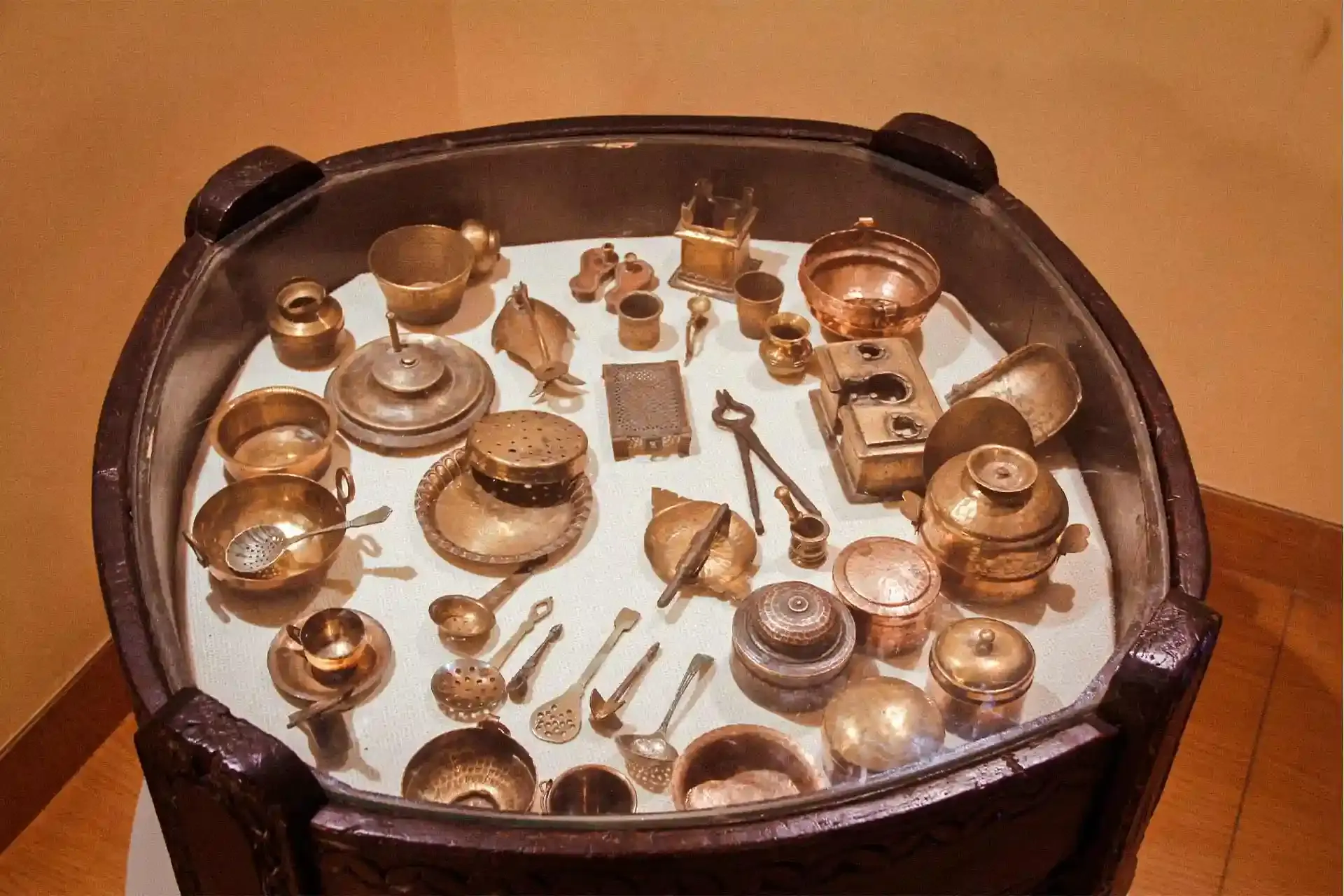
The Aai Museum's collection includes brass and copper kitchen vessels, a bullock cart, an ornate palkhi or palanquin, old carved doors, war items and ammunition, and Tanjore paintings, among other artefacts from past centuries. Together they cover domestic, ceremonial and martial life, giving a rounded picture of the region's heritage.
The pleasure of the collection is its range, because it covers life rather than just one theme. There are the brass and copper kitchen vessels, the everyday objects that fed households for generations, and a bullock cart, the workhorse of rural travel and trade. There is the ornate palkhi, the palanquin that carried people in ceremony and status, and old carved doors that speak to the craftsmanship of the time. The martial side is there too, with war items and ammunition that tie the collection to the fort's own history as a defensive stronghold. And there are Tanjore paintings, the gilded devotional art of the south, adding a layer of religious and artistic heritage. Seeing these together, in a fort, joins the dots between the domestic, the ceremonial and the military in a way a single-theme display never could.
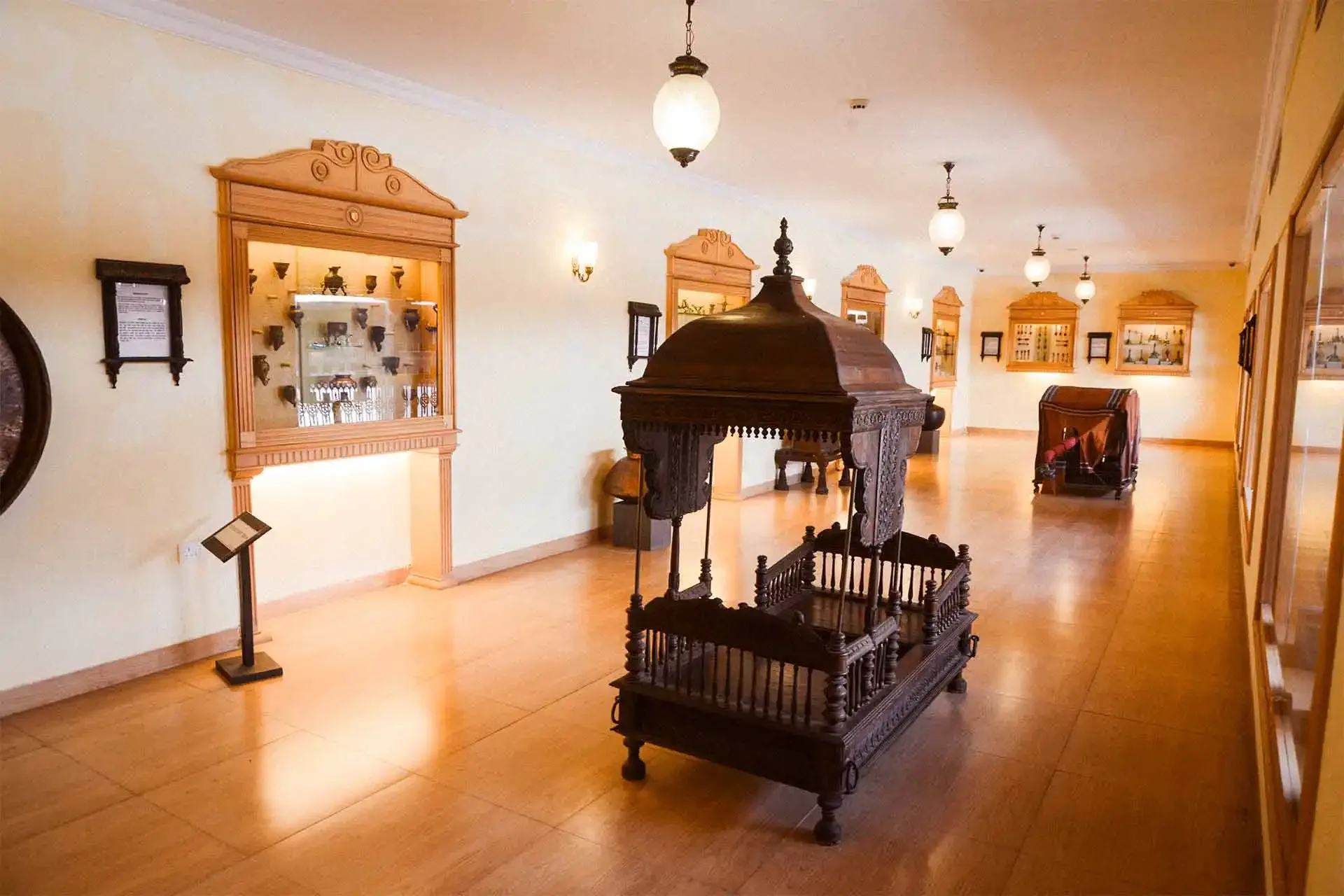
The Aai Museum matters because it preserves and shows the everyday and ceremonial heritage of the Maratha region within a fort of the same period, so the objects keep their context. For guests, it deepens a stay from a comfortable break into an encounter with real history, and it is a genuine, ownable part of what makes Fort JadhavGADH more than a resort.
Context is what gives the museum its value. An old brass vessel or a palkhi in a city gallery is interesting; the same objects inside a 300-year-old fort, where such things were actually used, are something more, because the setting completes them. This is the real point of Fort JadhavGADH: it is a living fort, not a themed hotel, and the museum is the clearest expression of that. For a guest, it turns a stay into something with substance, a chance to engage with the region's heritage rather than just admire a backdrop, and it is the kind of first-hand, specific experience that the place can offer and a standard resort simply cannot. It is also why a guided fort walk pairs so well with the museum, since the walk gives the history and the museum gives the objects.
The Aai Museum is best visited as part of a stay at Fort JadhavGADH, ideally alongside the guided fort walk, which gives the history that the artefacts illustrate. Allow an unhurried hour, and it pairs well with a rainy afternoon or the calm part of a day between the fort's outdoor activities.
The museum slots naturally into the rhythm of a stay. The best approach is to take the guided fort walk first, which sets out the fort's story and the region's history, then explore the museum, where the objects bring that story to life. An hour spent this way is far richer than glancing at the displays in passing. It is also the ideal thing for the quieter parts of a visit: a monsoon afternoon when the rain keeps you indoors, or the gap between an energetic morning of ziplining or the Moheem trek and an evening by the fort. Guests who take the time for the walk and the museum consistently say they got more from their stay, which is the point of staying in a heritage fort rather than a resort.
Fort JadhavGADH is at Jadhavwadi on the Hadapsar-Saswad road, about 27 kilometres from Pune city, roughly an hour by road, and around 30 kilometres from Pune airport. From Mumbai, it is about 150 kilometres and a three to four-hour drive. A car or cab is the practical way to reach the fort and its museum.
The fort, and with it the Aai Museum, sits in the countryside south-east of Pune. From Pune city, it is about 27 kilometres on the Hadapsar-Saswad road, roughly an hour depending on the Hadapsar traffic, and Pune airport is around 30 kilometres away, so flying into Pune and driving out is easy for outstation visitors. From Mumbai, it is about 150 kilometres and a three to four-hour drive via the expressway to Pune. Because the museum is part of the fort rather than a standalone attraction in the city, you experience it as a guest, so the practical way to come is by car or cab, staying at least a night to take in the museum, the fort walk and the rest of the experience properly.
Discover exclusive offers at Fort JadhavGadh and enjoy a memorable heritage getaway near Pune. Whether you're planning a relaxing Day Picnic Package with meals and fun activities, a luxurious Timeless Luxury staycation, or a festive celebration with the Festival Package, Independence Day Package, or Diwali Packages, the fort offers something special for every occasion. These packages include royal hospitality, heritage experiences, adventure activities, festive dining, and spa benefits in the historic Maratha fort setting. As part of the Orchid Hotels group, Orchid Rewards members enjoy up to 30% off on direct bookings, applied automatically with no promo code needed. Booking direct ensures the best rates, avoids third-party commissions, and gives you seamless access to all current packages and personalized hospitality.
The museum comes with the stay, so the value advice is the same as for any Fort JadhavGADH booking: book direct. As part of the Orchid Hotels group, the fort is covered by the Orchid Rewards programme, which gives members up to 30 per cent off direct bookings, applied automatically with no coupon to enter, and joining is free. Booking direct also keeps you clear of travel-site commissions and opens up any package or longer-stay deal. Since the fort is a single property with limited rooms, book ahead for the green monsoon and the busy festive and winter season. To stay where the collection is, you can book your Fort JadhavGADH stay directly.
Q: What is the Aai Museum at Fort JadhavGADH?
A: The Aai Museum is a private heritage collection housed inside Fort JadhavGADH, a 300-year-old Maratha fort
near Pune. It holds artefacts spanning centuries, including brass and copper kitchenware, a bullock cart, a
palkhi, old doors, war items and Tanjore paintings, displayed within the living fort.
Q: What can you see in the Aai Museum?
A: The collection includes brass and copper kitchen vessels, a bullock cart, an ornate palkhi or palanquin,
old carved doors, war items and ammunition, and Tanjore paintings, among other artefacts. Together they cover
domestic, ceremonial and martial life across centuries of the region's heritage.
Q: Is the Aai Museum open to the public or only to guests?
A: The museum is part of Fort JadhavGadh and is experienced as part of a stay, best alongside the guided fort
walk. To explore the collection fully, book a stay at the fort; for current visiting arrangements, check with
the resort directly when you book.
Q: How long does it take to see the museum?
A: Allow an unhurried hour, ideally after the guided fort walk, so the history gives context to the artefacts.
It pairs well with a rainy monsoon afternoon or the calm part of a day between the fort's outdoor activities.
Q: How do I reach Fort JadhavGadh?
A: It is about 27 kilometres from Pune city on the Hadapsar-Saswad road, roughly an hour by road, and around
30 kilometres from Pune airport. From Mumbai, it is about 150 kilometres and a three to four-hour drive. A car
or a cab is the practical way to reach the fort.
■ View All Royal Rooms and Book Direct • Check Availability • Current Offers • Orchid Rewards Member Rates
Experience enchantment at Fort JadhavGADH, Pune. From dream weddings to historic retreats.
Say 'I do' in majestic settings at Fort JadhavGADH. Click to explore your dream destination wedding near Pune!
Choosing among Fort JadhavGADH's 10 accommodation categories is one of the most interesting room-selection decisions in Indian hospitality.
The staycation near Pune has a standard offering: a resort with a pool, a buffet, and enough distance from the city to feel like a break.
The Mumbai to Fort JadhavGADH weekend trip is one of Maharashtra's finest short breaks and one of its most underrated.
Most restaurants near Pune offer a view, a menu, and an ambience. Fort JadhavGADH offers something far rarer.
Fort JadhavGADH is fully integrated into the Orchid Rewards programme — every direct booking earns Petals and exclusive member benefits.
Leave a Reply